
Session
Edge AI: Robustness, Continual Learning and Real-World Deployment
Tuesday July 7, 2026 | 11:00-12:00 CEST
Albert II Auditorium
Description
As AI systems increasingly move from centralized infrastructures to real-world edge environments, European industry faces both major opportunities and significant challenges in deploying adaptive and continually learning AI systems at scale. This session at the ENFIELD Final Conference will focus on the challenges of deploying adaptive AI in dynamic environments and the strategic advantages this technology can offer to key European sectors such as automotive, manufacturing, robotics, and industrial automation. Particular attention will be given to robustness, continual learning, trustworthiness, validation, safety, energy efficiency, and regulatory compliance in industrial Edge AI deployments.
The session will open with a 15-minute presentation providing an overview of the main scientific and technological results on Adaptive AI achieved within the project, together with the key challenges identified throughout the research and deployment activities. This introduction will be followed by a panel discussion involving representatives from European AI Networks of Excellence, research and innovation projects, and European industry-oriented associations. The debate will explore current barriers to real-world adoption, industrial requirements, emerging opportunities for European competitiveness and technological sovereignty, and future directions for trustworthy adaptive AI systems operating in continuously evolving environments.
Speakers
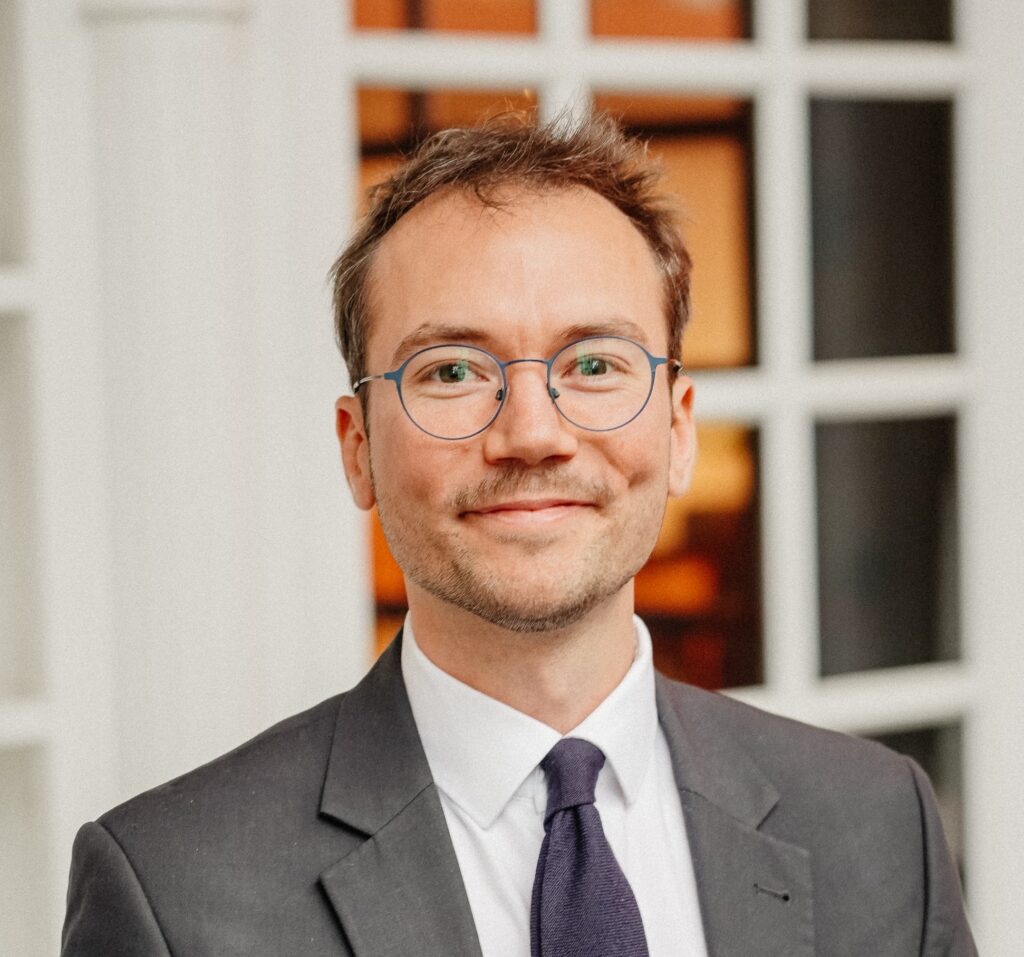
Antoine-Alexandre André
Policy and Legal Officer, European Commission – AI Office (EU AIO)
Antoine-Alexandre André is a lead member of European Commission’s team in charge of AI innovation and policy coordination (within the AI Office). He has been directly working on the creation and implementation of the AI Act, the Chips Act, the Coordinated Plan on AI and the AI Innovation Package. Recently, he has been the designer and primary staff drafter of the AI Continent Action Plan and the Apply AI Strategy.

Ovidiu Vermesan
SINTEF/dAIedge
Dr Ovidiu Vermesan is Chief Scientist at SINTEF Digital, Oslo, where he is involved in applied research on future edge autonomous intelligent systems and edge AI, wireless sensing devices and networks, smart systems integration, microelectronics design of integrated systems (analogue and mixed signal), and IIoT. He holds a PhD in Microelectronics and a Master of International Business (MIB). His applied research activities focus on advancing edge AI processing, embedded intelligent electronic systems, wireless and smart sensing technologies, and the convergence of these technologies and applying the developments to applications such as autonomous systems, autonomous vehicles, AI-defined vehicles, robotics, green mobility, energy, buildings, and industrial manufacturing. He is currently the coordinator of the Chips JU Edge AI Technologies for Optimised Performance Embedded Processing (EdgeAI) project.
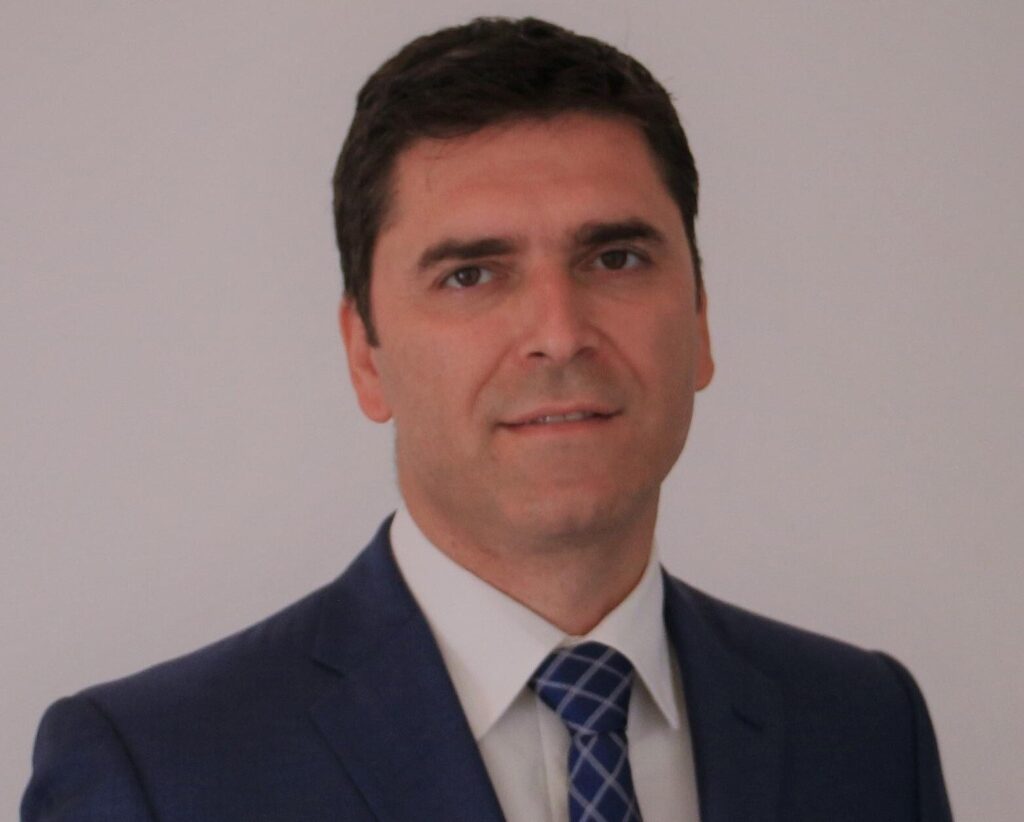
Sotiris Makris
Professor, University of Patras
Sotiris Makris is Head of Robotics, Automation and Virtual Reality in Manufacturing at LMS. He has been leading research activities of Artificial Intelligence application in manufacturing for more than 25 years pursuing the challenge of Flexible and Resilient Manufacturing and Production Networks. He has deeply investigated the subject of cooperating robots in two main directions namely human-robot collaboration as well as robot-robot collaboration. He has implemented several solutions validating these ideas in industry. He has served as coordinator of several European funded projects since FP4 to Horizon Europe. He is serving as the Executive Director of the “Teaching Factory Competence Center”, which is oriented into delivering Industry 4.0 oriented Training and Innovation services to the industry. He has been leading Innovation activities in the context of the EIT Manufacturing in cooperation with high tech SMEs and large Industry. He has published more than 170 scientific articles, 1 book and a several of Encyclopedia entries, Editorials and White papers. He is Associate Member of the International Academy of Production Engineering-CIRP.
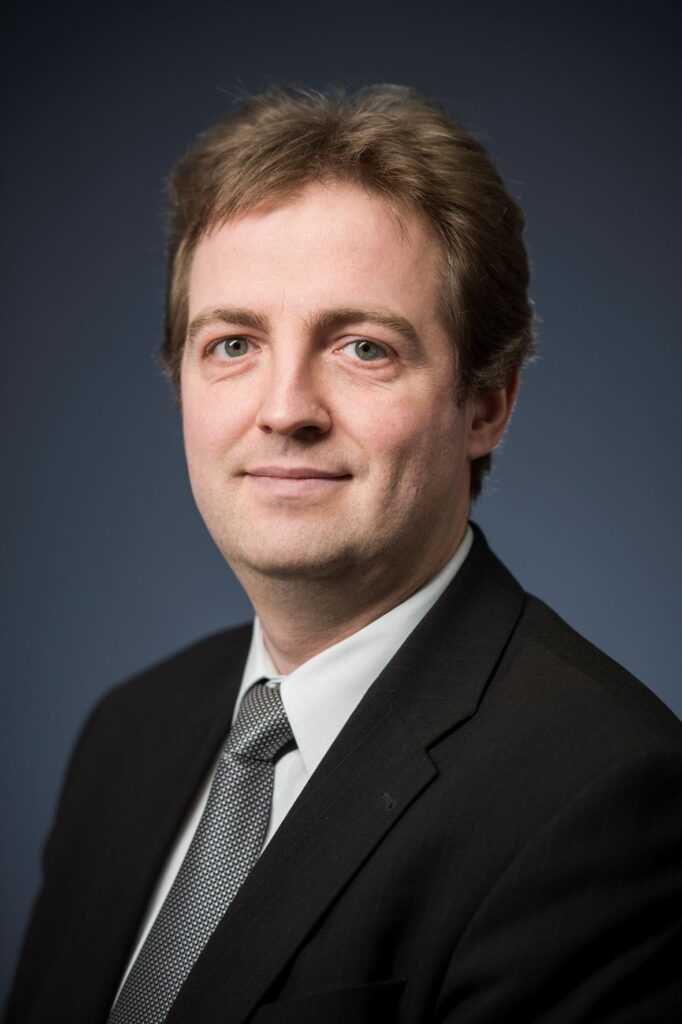
Bert Pluymers
Industrial Research Manager, KU Leuven
Dr. Ir. Bert Pluymers is a Belgian mechanical engineer and senior research and innovation manager at KU Leuven, where he earned his MSc in 2000 and PhD in 2006, specializing in mid-frequency vibro-acoustic analysis. After working as a senior researcher in the KU Leuven Noise and Vibration Research Group, he became Industrial Research Manager for the Industrial Research Fund in 2008, later Senior Manager, focusing on technology transfer and the Dynamics 4.0 valorisation programme for the LMSD section. He has published over 200 papers, coordinated numerous national and European research projects, and holds several leadership and representative roles in major European automotive, manufacturing, mobility, and research associations, including EARPA, 2Zero, CCAM, ERTRAC, EFFRA, VWA, and Flanders Make. He has also played a leading role in the ISMA conference series and, as of 2025, serves as KU Leuven Division Manager and vice-chair of the KU Leuven Section LMSD.

Andon Tchechmedjiev
Associate Professor, IMT
Andon Tchechmedjiev is Associate Professor at Institut Mines-Telecom (IMT Mines Alès), where he is a member of the SyCoIA (Complex systems & AI) lab. He holds a PhD in AI and Computational Linguistics from University Grenoble-Alpes. He works at the intersection of Natural Language Processing, Knowledge Engineering and Deep Learning with applications in various Industrial domains, as well as Biomedical Informatics.

Walter Quadrini
Researcher, POLIMI
Walter Quadrini is a technologist and PhD candidate at the Department of Management, Economics and Industrial Engineering at Politecnico di Milano, where he manages research activities of the Industry4.0lab. He is actively involved in the coordination and implementation of research projects funded by the European Commission, with a focus on digital manufacturing and industrial innovation. His research explores the digitalization of production processes, particularly the vertical and horizontal integration of manufacturing systems, and the deployment of robotic hardware and software architectures for real-time data acquisition on the shop floor. Currently, he contributes to the Horizon Europe project ENFIELD, where he investigates the adoption of AI-enabled technologies in manufacturing environments, with a particular focus on the technical solutions companies adopt to overcome current limitations of data-driven models applied to production processes.