ENFIELD collaboration explores new approaches on IoT Security at CPS4CIP 2026
A joint research study by the Norwegian Computing Center and Özyeğin University, presented at the ESORICS-CPS4CIP 2026 workshop, demonstrates how robust data-processing techniques can improve the reliability of IoT systems, even when a significant proportion of sensors are compromised.
As connected devices become increasingly embedded in critical infrastructures and intelligent systems, ensuring the trustworthiness of the data they generate is a growing challenge. What happens when sensors malfunction, provide inconsistent readings, or are deliberately manipulated? And how can distributed systems continue operating reliably when some of their data sources can no longer be trusted?
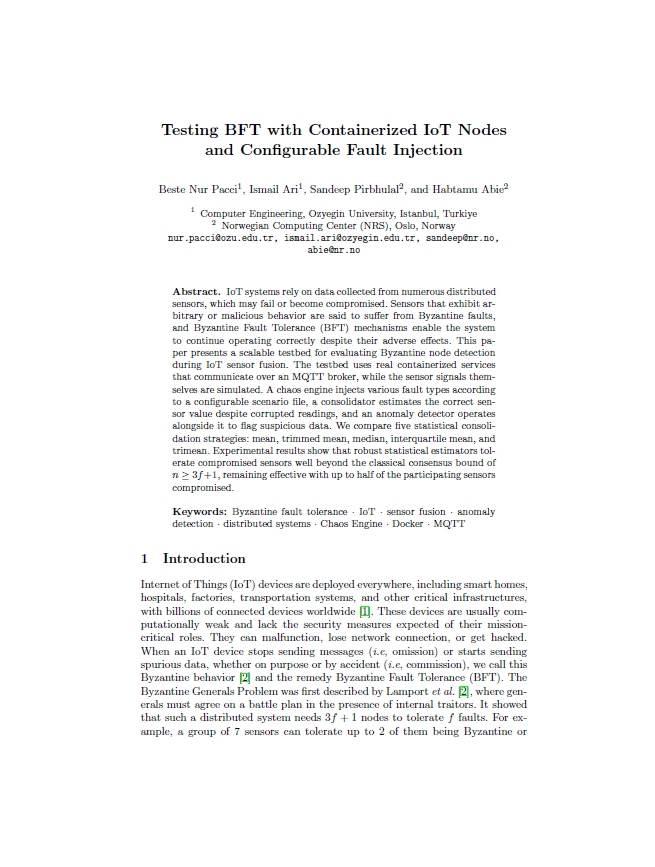
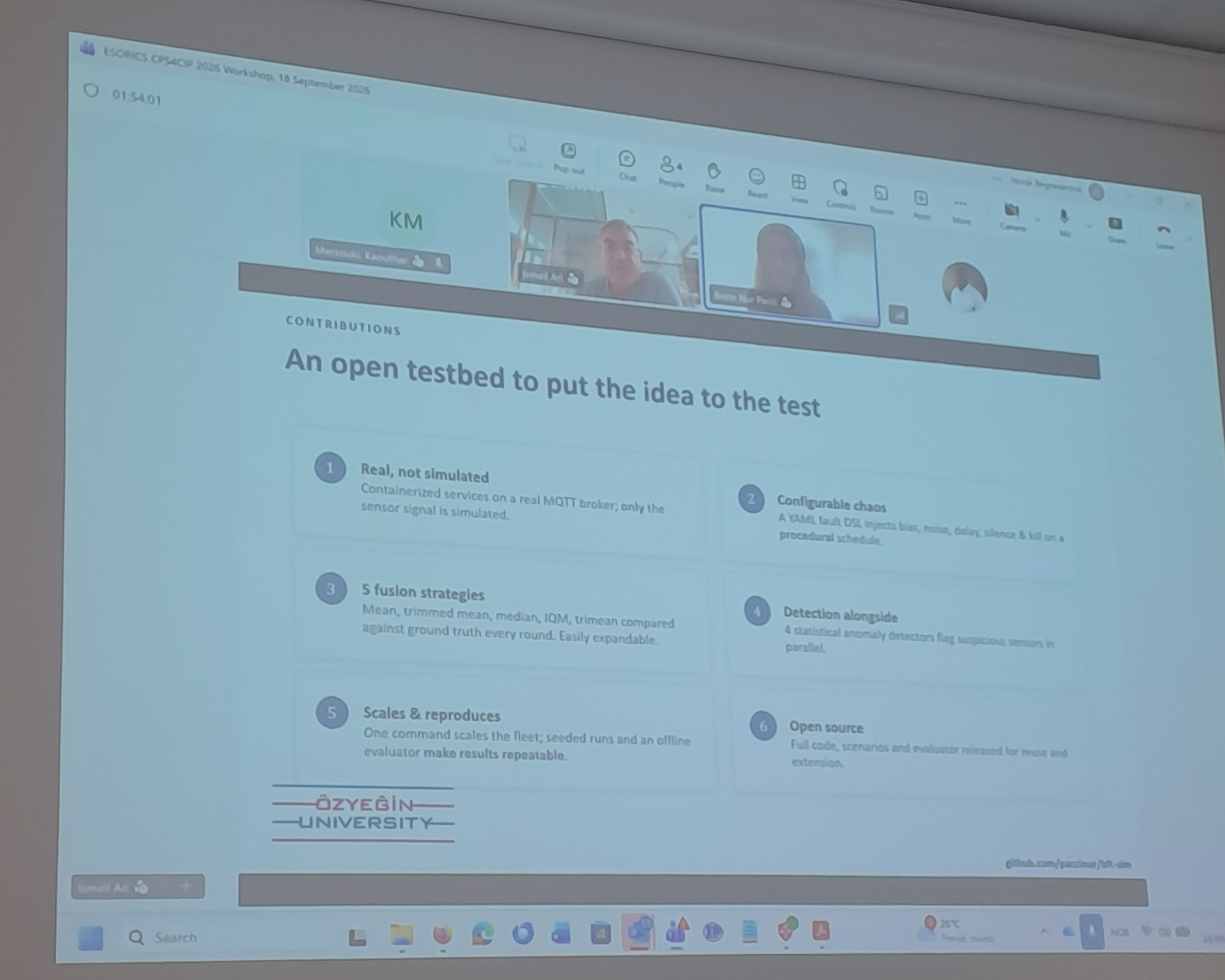
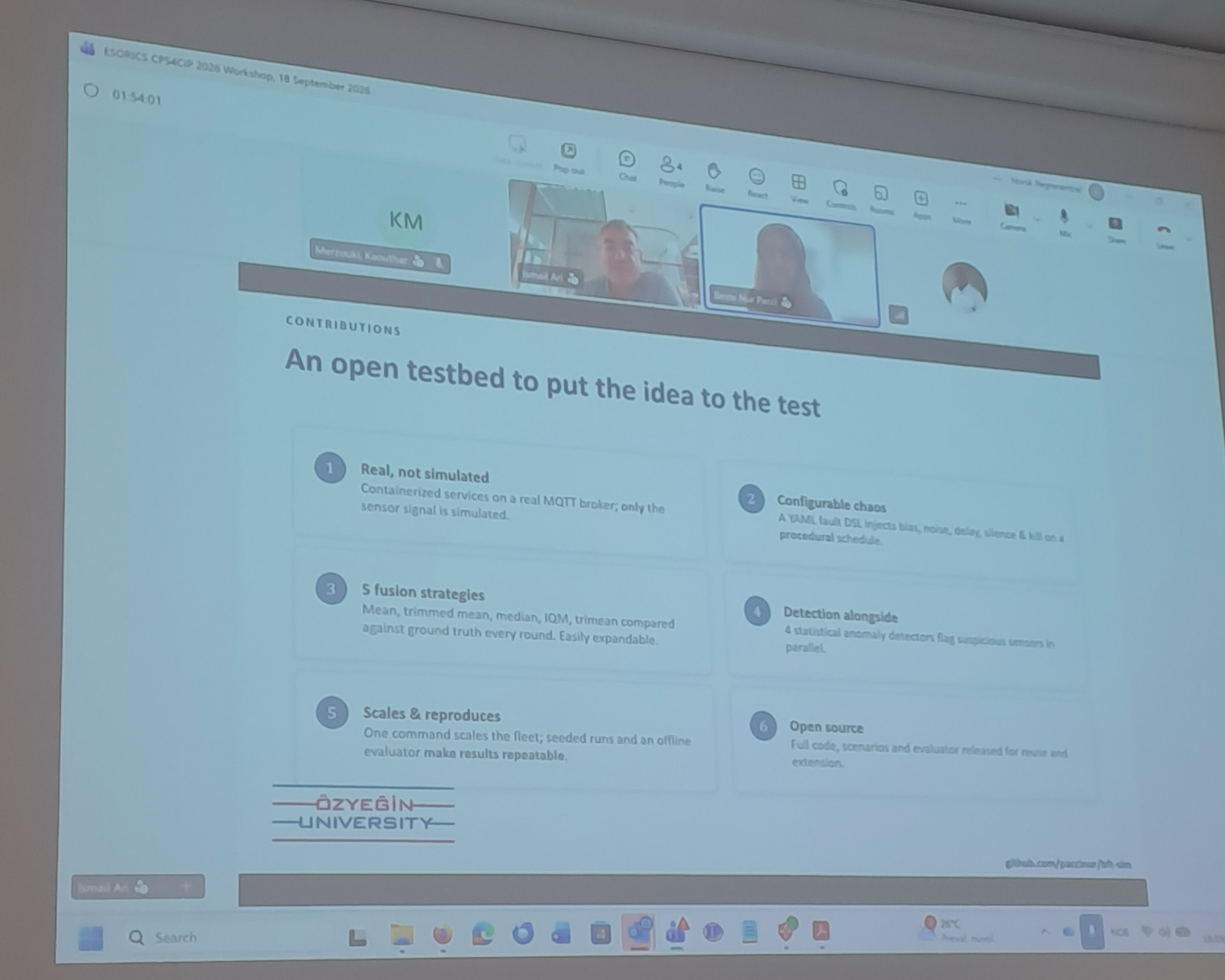
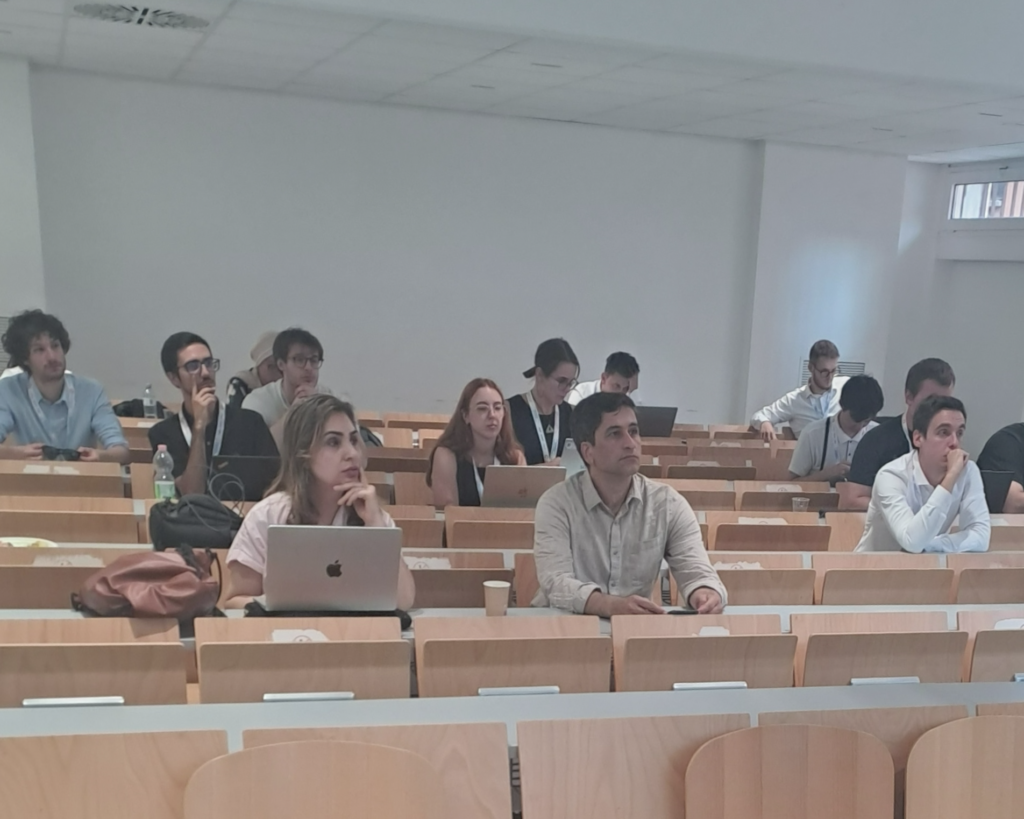
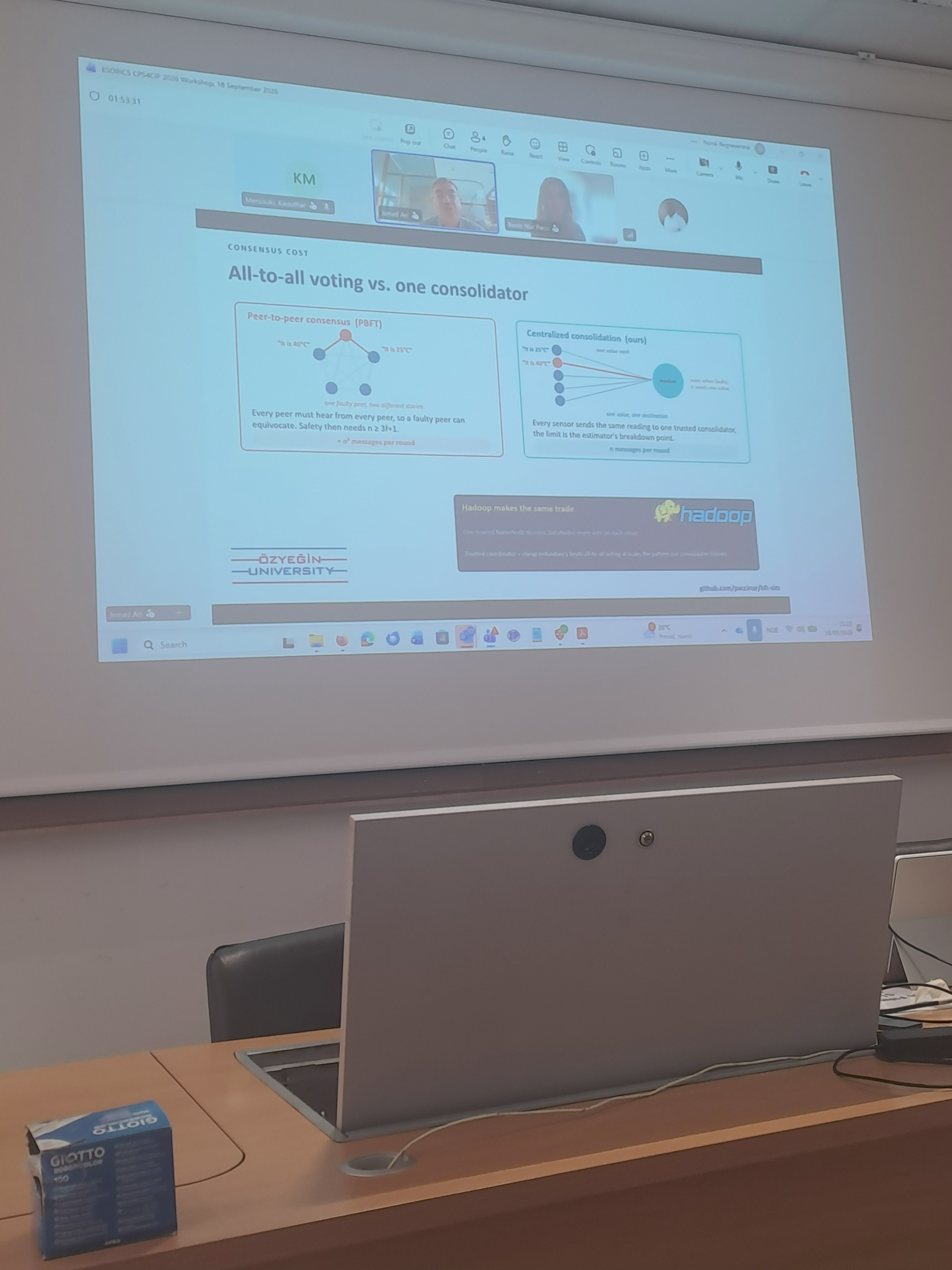
These questions are at the centre of the research paper “Testing BFT with Containerized IoT Nodes and Configurable Fault Injection”, presented online by Ismail Ari at the 7th International Workshop on Cyber-Physical Security for Critical Infrastructures Protection (CPS4CIP 2026), held on 18 September 2026 in Rome, Italy, alongside the 31st European Symposium on Research in Computer Security (ESORICS 2026).
Authored by Beste Nur Pacci, Ismail Ari, Sandeep Pirbhulal, and Habtamu Abie, the study represents another scientific achievement arising from the ongoing collaboration between the Norwegian Computing Center (Norsk Regnesentral) and Özyeğin University, developed within the ENFIELD project’s Adaptive AI pillar.
More Resilient and Trustworthy IoT Systems
The research focuses on Byzantine Fault Tolerance (BFT), a fundamental concept in distributed computing that addresses how systems can remain operational and produce reliable results even when some of their components behave unpredictably or maliciously.
To investigate this challenge, the researchers developed a scalable testing environment that reproduces the behaviour of distributed IoT sensor networks under different failure scenarios.
The proposed testbed combines real containerized services, communicating through an MQTT messaging broker, with simulated sensor signals. A configurable chaos engineering mechanism introduces different types of faults, allowing researchers to examine how the system responds to compromised or unreliable information.
The framework also integrates mechanisms for consolidating sensor readings and detecting anomalies, making it possible to evaluate different strategies for maintaining accurate information despite corrupted inputs.
Five statistical approaches were examined, including the mean, trimmed mean, median, interquartile mean, and trimean.
One of the study’s most significant findings is that robust statistical estimation methods can remain effective even when up to 50% of the participating sensors are compromised, under the experimental conditions evaluated. This result is particularly relevant when compared with the stricter fault thresholds traditionally associated with Byzantine consensus protocols, although statistical estimation and distributed consensus address different problems.
The findings offer valuable insights into how IoT systems can be designed to better withstand failures and malicious interference, potentially supporting more dependable data processing in areas such as smart infrastructure, industrial monitoring, and other sensor-driven applications.
Research exchange and scientific cooperation
Beyond its technical contribution, the paper reflects the lasting connections established through ENFIELD’s Third-party Exchange Scheme (TES).
Ismail Ari, a selected researcher under the TES Open Call, has maintained an active scientific collaboration with the Norwegian Computing Center, working alongside researchers involved in ENFIELD’s Adaptive AI activities.
This cooperation continued through an additional, self-funded research visit to the Norwegian Computing Center from 15 to 26 June 2026. During this period, collaborative research and scientific writing activities contributed to the preparation of conference papers subsequently accepted at international scientific events, including CPS4CIP 2026.
The resulting publication illustrates how an initial research exchange can evolve into continued cooperation, bringing together complementary expertise and creating opportunities for scientific contributions beyond the original exchange period.
Within ENFIELD’s Adaptive AI pillar, this work contributes knowledge relevant to trustworthy and resilient intelligent systems. Reliable sensor information is particularly important for applications that must adapt to changing environments, detect anomalies, and make decisions based on distributed data sources.
By investigating methods for maintaining data reliability in the presence of compromised sensors, the research provides a foundation for further developments in robust data processing and adaptive digital infrastructures.
The presentation at CPS4CIP 2026 therefore represents both a scientific contribution to IoT resilience and a tangible example of the long-term value of international research mobility.
Through collaborations such as this, ENFIELD continues to connect researchers, encourage the exchange of expertise, and translate research partnerships into new scientific knowledge. The joint publication demonstrates how relationships established through the project can sustain research activities and generate meaningful outcomes beyond individual exchanges.
Workshop: CPS4CIP 2026
Conference: ESORICS 2026
Paper information
Title: Testing BFT with Containerized IoT Nodes and Configurable Fault Injection.
Authors: Pacci, B. N., Ari, I., Pirbhulal, S., & Abie, H. (2026).
Read more: Testing BFT with Containerized IoT Nodes and Configurable Fault Injection